
Media List
Frequency Rights Accelerate Infrastructure Growth
Frequency rights authorize the use of radio spectrum for wireless signal transmission, crucial for infrastructure growth in mobile networks, satellite communications, and broadcasting.

Property Owners Hold Deployment Hostage
Property owners significantly impact wireless network deployments through site access control and lease agreements, affecting deployment timelines and costs.

Professionals Depend on Invisible Infrastructure
Invisible infrastructure encompasses systems like data centers, wireless networks, and fiber optics that enable seamless technological connectivity and data exchange, critical for modern societies.
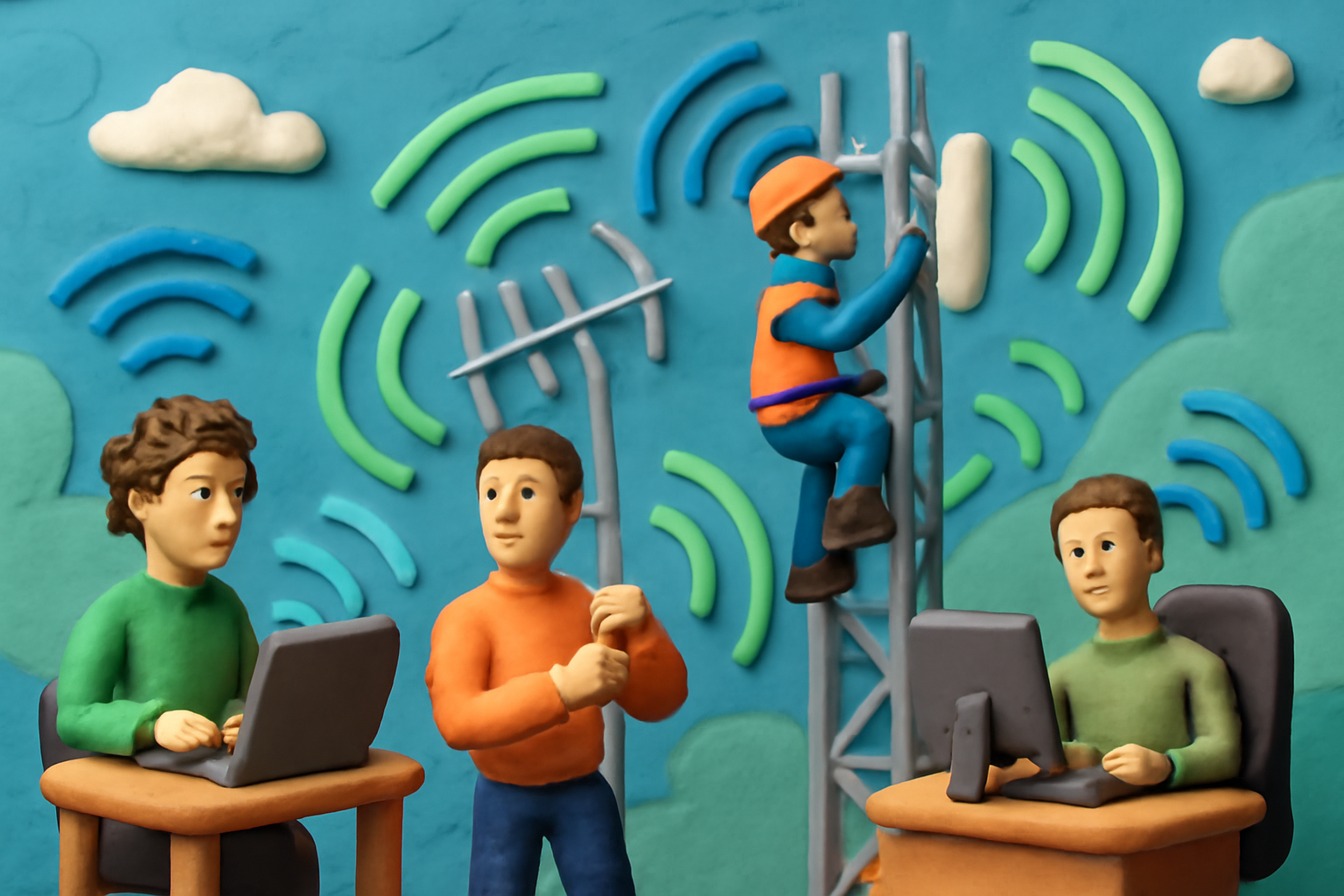
Old Hardware Coexists With New Standards
The process involves compatibility, performance, and regulatory considerations to integrate old hardware with new communication standards.

3AM Alarms Mean Someone Lost Service
A 3AM alarm in wireless networks denotes a fault or failure in a network component, triggering alerts for operators to ensure quick resolution and service maintenance.

Skyscrapers Scatter Radio Waves Unpredictably
Skyscrapers influence wireless communication by altering radio wave paths through scattering, reflection, and diffraction, affecting signal reliability.

Carriers Battle for Frequency Dominance
Frequency spectrum management involves carriers competing to access radio frequency spectrum for optimized network performance and expanding service offerings amid growing wireless demand.

Bandwidth Allocations Dictate Strategy
Bandwidth allocation is crucial for network performance, service offerings, and regulatory compliance, involving strategic spectrum management to accommodate data transmission demands while minimizing interference.

Connectivity Hides Behind Every Lamppost
Urban lampposts serve as strategic sites for small cell installations to enhance network coverage, especially for 5G technologies, by utilizing existing urban structures for seamless connectivity.

Towers Upgrade While Networks Stay Live
Implementing strategies for cellular tower upgrades ensures continuous service, minimizes downtime, and integrates new technologies like 5G while maintaining active network operations.

Outages Trigger Midnight Panic Calls
Wireless network outages highlight vulnerabilities and necessitate robust incident response and redundancy strategies for maintaining connectivity.

Concrete Walls Devour Signal Strength
Concrete walls impede wireless signals due to their dense material composition and thickness, affecting higher frequency signals more severely.

Airwaves Sold to Highest Bidders
Spectrum auctions allocate electromagnetic spectrum to wireless carriers, promoting efficient use and innovation through various auction formats like simultaneous multi-round auctions.

Crowded Frequencies Limit Coverage Expansion
Spectrum scarcity in wireless communications is addressed by deploying advanced technologies like dynamic spectrum access and cognitive radio to optimize frequency usage.

Cities Transform Into Signal Ecosystems
The evolution of cities into signal ecosystems is driven by the proliferation of wireless technologies like small cells, 5G, IoT devices, and Wi-Fi 6, enhancing connectivity and enabling modern urban applications.

Legacy Equipment Clashes With Modern Demands
Addressing challenges with legacy wireless equipment involves retrofitting, upgrading, and implementing solutions like SDN for operational efficiency.

Engineers Keep Networks Alive 24/7
Telecommunications engineers use redundancy, network monitoring, and security measures to achieve five nines uptime, ensuring maximal network availability.

The Art of RF Optimization: Bridging Theory and Reality
RF optimization involves applying electromagnetic theory to enhance network performance by managing parameters such as frequency and power levels, using predictive analysis and real-time data analytics.

Spectrum Auctions: The High-Stakes Game of Wireless Control
Spectrum auctions are critical for governments to allocate radio frequency spectrum to telecom operators, influencing mobile communications and technological advancements.

Inside the Mind of a Wireless Site Acquisition Expert
The role of a wireless site acquisition expert encompasses strategic planning, site identification, negotiation, compliance, and community relations to deploy telecommunications infrastructure effectively.

This content is for entertainment and technical demonstration only and may be flawed, incomplete or outdated. Always consult a qualified professional for information and decisions. Content is provided “as is” without warranties of any kind. Use at your own risk. We're not responsible for any loss or damage from use or reliance.